


It’s been just over 1 month since I joined the data school, and it’s been a whirlwind experience since day 1. From diving headfirst into unfamiliar tools to learning how to think more like an analyst, the past few weeks have been both challenging and incredibly rewarding.
In just over a month, I’ve already picked up lessons that go far beyond technical skills. It’s not just about learning Tableau or improving my data literacy - it’s about how to approach problems, communicate insights, and continuously adapt in a fast-paced environment.
Here are some of the key things I’ve learned so far.
- Planning is everything
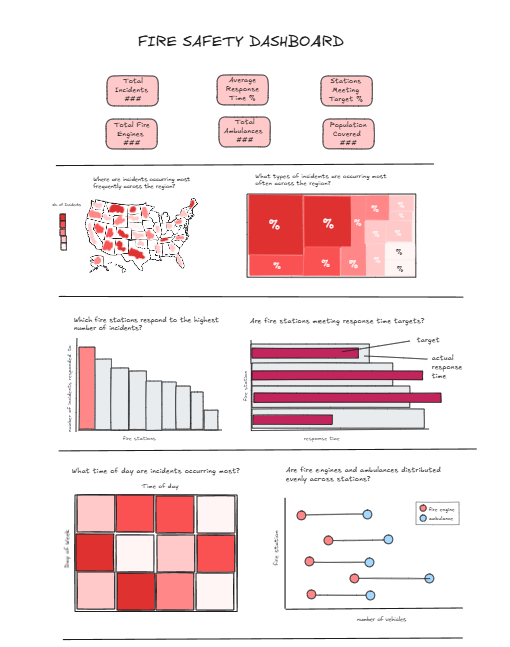
I’m sure you’ve heard the saying - failing to plan is planning to fail - and I have found that to be quite literal with a lot of the work I have been doing in the data school. Whether it’s a Workout Wednesday, Makeover Monday, Preppin’ Data challenge, and even blogs, planning what you are going to do before actually doing it goes a long way. It helps to turn all your initial ideas into a reality, even if you stray from the original plan with the end product. I find using Excalidraw incredibly helpful for planning, particularly for sketching designs before creating them in Tableau Desktop or Power BI. Especially with the time constraints of the dashboard challenges, planning before you do it allows you to see all of the information you already have before deciding what to do with it.
Here is an example of a dashboard plan I have created on Excalidraw:
- The use of colour is crucial
Learning how to use colour correctly in your dashboards will transform not just the way your dashboards look, but the story you are trying to tell within them. You will likely find that you need to use a lot less colour than you think you do. Choose a colour theme and try to stick to it as much as possible. Reducing the opacity of colours will also help illustrate the story telling element of the dashboard without distracting the user with bright colours. Going back to my previous point, planning can be a really helpful way of making sure you are using colour correctly, and not overcomplicating the design.
- Getting it wrong is part of the process
There will be countless times where your knowledge is tested; when you’re learning a new concept that you haven't fully grasped; when you’re preparing for a Friday presentation and feeling a little out of your depth. That is normal. You are not going to instantly understand everything you learn - some concepts will take more getting used to than others. In a similar way, not everyone learns in the same way. You are in a cohort with at least 4 other likeminded individuals, but who will all have a different way of learning to each other. It’s important not to compare yourselves to others, and give yourself the space to discover your own learning style. Test your knowledge without being afraid to get the answer wrong sometimes. You will get it wrong, and this is how you’ll learn.
- Personal development is really important
The more you put into the data school, the more you will get out of it. You will have ample opportunity to showcase yourself as a consultant, and it’s really important that you do so. Your profile is what gets shown to clients to demonstrate your skills as a data consultant, and show them a bit about who you are. It's really necessary to put time and effort into this - and you can tailor this to your interests. It is also a great way of improving at things you may not be as good at. I am not a great blog writer, so I am writing this to get better and encourage myself to keep going at it.
- EVERYONE is there to support you (and actually wants to help)
I am yet to meet an unhelpful person at The Information Lab. I have seen nothing but support and genuine care from everyone I have met, and I only want to do the same for others. Pretty much everyone you meet will have been in your exact position before, starting out at the data school, and so there is no one better to offer support with anything you need. It is an incredible community and one I feel truly grateful to be a part of.