


This blog will look at the types of ranks, using Tableau Prep and Tableau Desktop to visualize the differences.
The Default Rank Option
Also known as the competition rank on Tableau desktop (see below), this default rank option involves skipping rank numbers if two items share the same rank (hence the 1, 2, 2, 4).
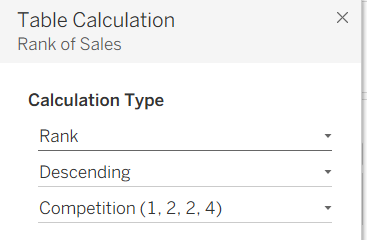
To explain this further, here's an example: Say toothbrush brands are being rated. Both SmileBright and TeethClean have the same score, and PleaseBrush is the next highest. SmileBright and TeethClean will have a "1", and PleaseBrush will have a "3" as a rank with this ranking option, skipping "2" due to two items having the same rank.
Here's another example in Tableau Prep. In the image below, the data looks at scents of lotions in a store. Water has 42 items, meaning the next ranked item in the default ranking system will be 43.
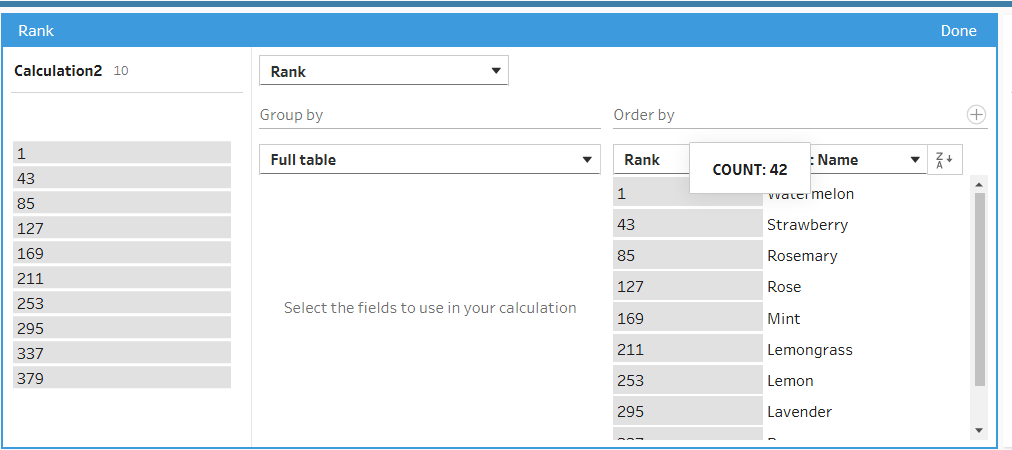
Here is what the table output would look like in Tableau Prep:
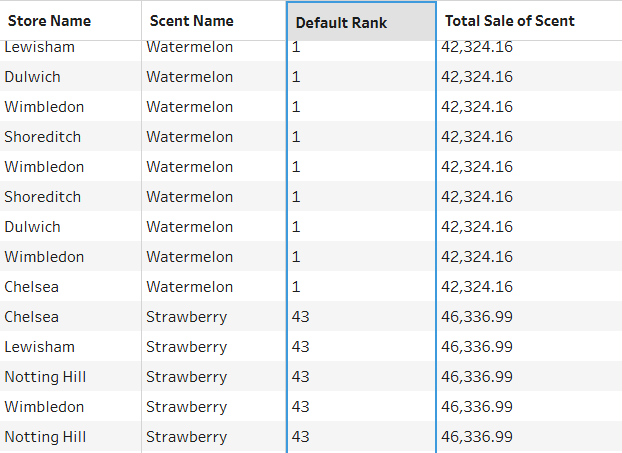
If this isn't the desired output, then the rank type should be switched, making it beneficial to know the different options.
Dense Rank
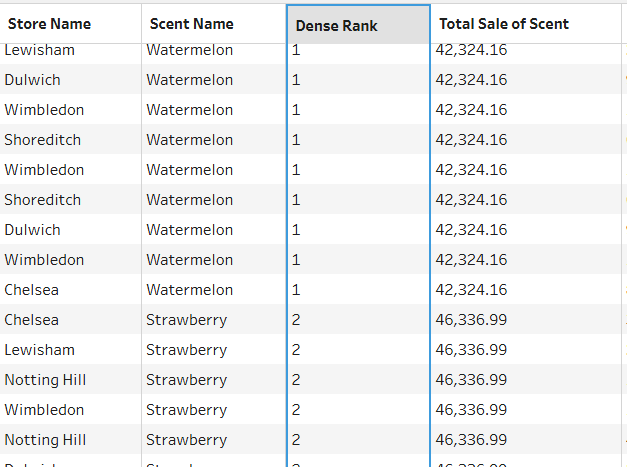
Dense rank is a good alternative when you don't want the skipping rank numbers seen in the competition rank. This format is 1, 2, 2, 3 (see below). This ranking system has items sharing the same rank if the values are the same.
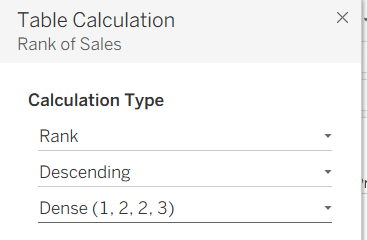
This makes dense rank a good alternative for competition rank if you want to avid skipping numbers. Returning to the scent example, now every sent has it's own rank in order.
Here is what the table output looks like in Tableau Prep:
Percentile Rank
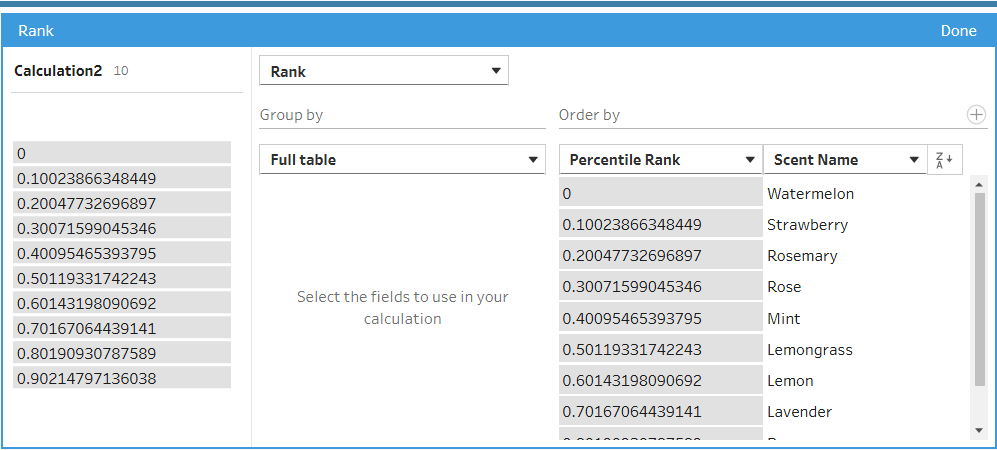
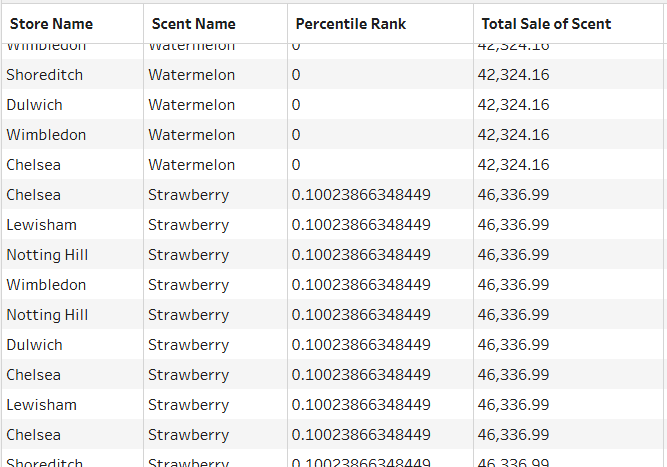
The percentile rank looks at distribution, putting the values between 1 and 0. Here is what that looks like in Tableau Prep:
Modified Competition
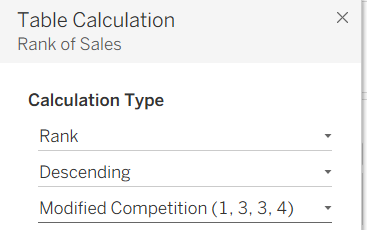
The format for modified competition rank on Tableau Desktop is 1, 3, 3, 4 (see below). How this differs from competition rank is, instead of both of the second-highest values getting ranked "2", second place itself is skipped and the second-highest values are ranked "3".
I hope this blog helps you understand the type of rank that you need for your calculations. Good luck!