


Data And Storage
Data is the main asset of any organisation’s components, the way in which it is stored has changed significatnly over time. Storage is significantly cheaper now therefore loading data is no longer anything too expensive, technological advancement allows for the data to first be Extracted, Uploaded and Transformed.
As data nowadays is greater in volume, variety and velocity then the way in which it is stored has resulted in many different types of offerings which are dependent on the needs of the data. Tableau offers two different cloud based services which are Tableau Cloud and Tableau Server.
Main Tableau Ecosystem
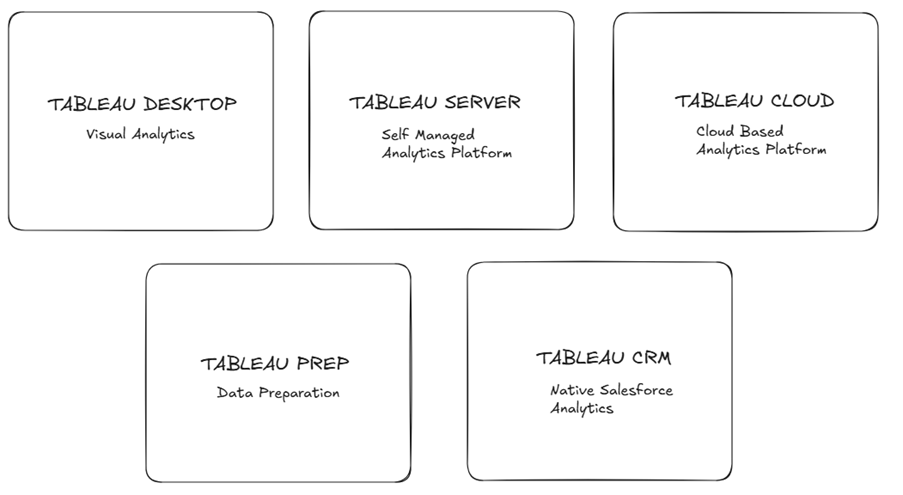
Within the ecosystem, Tableau has the ability to host, transform, and maintain data, there is also the ability to connect to other applications through its embedding and APIs. Through all these services, Tableau provides flexibility to the user in terms of what they can do based on what they need, as there are also different licensing options available within Tableau Server and Tableau Cloud.
What types of needs will determine the cloud-based subscription?
The main difference between Tableau Cloud and Server is that the former is hosted in Tableau's Cloud, while the latter is hosted on an internal server that is isolated, resulting in a safer infrastructure to host data
Tableau Server
It's a self-managed platform, so it goes beyond just hosting the company's data and projects it also allows companies transform data, build visualisations, and collaborate on insights as a company. Because it's fully accessible within the organisation, companies stay in control of how everything runs: network access, deployment, data access, and upgrade timelines are all decisions they make. That level of control is what makes it easier to meet compliance requirements, with no fine print to worry about.
It also lets the user decide where exactly the data is hosted within a company’s physical data center or in any cloud environments which the company is part of (ie aws, google cloud plat or microsoft azure). With the flexibility of hosting locations, organisations which have strict governance rules can confidently meet all the requirements needed.
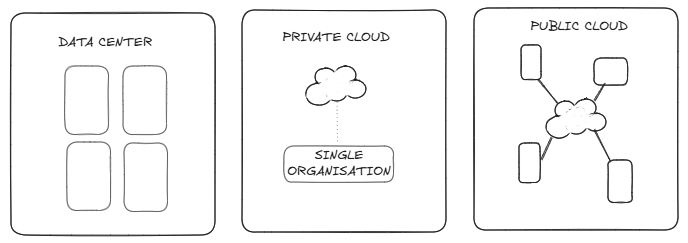
An advantage of hosting through physical datacenters or any other cloud environments is that the only limitation is dependent on the available computing resources, meaning it is only limited by the size of the computer cores.
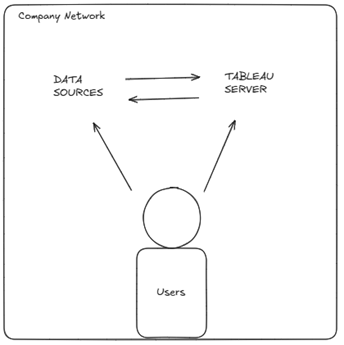
Whereas Server allows you to determine the compute power allocated at each point in time, provided the usage patterns for different scenarios are known in advance. The way their licensing works is also similar to that as licenses are core-based.
Tableau Cloud
Tableau Cloud is a SaaS service managed by Tableau in its network, meaning that all the necessary maintanance and updates are done by them. Useful for the organisations which do not have the capacity or the knowledge to run a internal self managed platform.
In Tableau Cloud, the approach is similar to Tableau Public, in that the data is extracted rather than live-connected. This is done for both security and infrastructure reasons as every live connection to the data incurs a cost.
There is also a limited capacity by default, meaning additional storage requires an upgraded plan, and there is generally more of a restriction on the number of tables and the volume of data that can be accessed. Overall, it follows a more pay-as-you-go model.
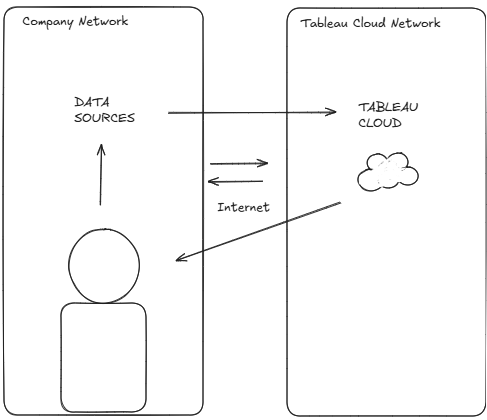
Therefore to summarise:
Tableau Server
- Hosted on an internal, isolated server, resulting in a safer infrastructure to host data.
- Since it's self-managed and fully accessible within the organisation, the organisation retains control over network access, deployment, data access, and upgrade timelines.
- Allows you to determine the compute power allocated at each point in time, provided usage patterns for different scenarios are known in advance.
- That level of control makes it easier to meet compliance requirements.
Tableau Cloud
- Hosted in Tableau's own cloud infrastructure, rather than internally.
- Data is extracted rather than live-connected, similar to the approach used in Tableau Public, for security and infrastructure reasons.
- Comes with limited capacity by default, so additional storage requires an upgraded plan.
- Generally has more restrictions on the number of tables and volume of data that can be accessed.
- Follows a more pay-as-you-go model.