


Much of the Data School's training is focused on ultra fast-paced prototyping.
During training, consultants will be working on half-week projects with industry clients, having just 20 hours to produce and deliver high-quality presentations and prototypes.
How do we manage it?
To produce high-impact work on such a tight timeframe, consultants need to figure out where to focus their efforts, and where to dial back scope.
Here are some fundamentals for managing projects and delivering your prototype in a tight timeframe.
- Fast sketches = Fast feedback
- It’s not what you have, it’s how you present it
- You don’t need to have everything right, but you can’t have the facts wrong
- Communication is your safety net
Fast sketches = Fast feedback
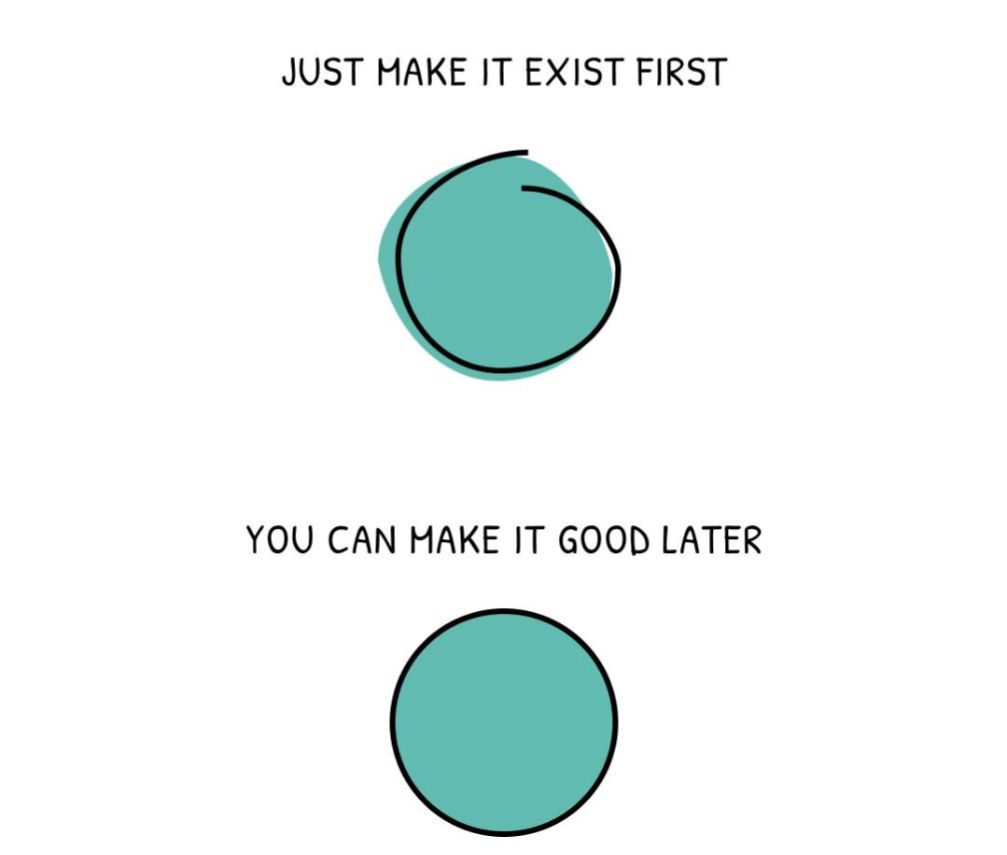
Get the basics of what you want sketched out quickly, then get feedback on it.
When working with a tight timeframe, not everything you want will be ready by the deadline. How do you decide what to work on with the time you have?
The idea is that you sketch out all the ideas you have, get feedback on them, and keep only the best ideas that you can implement in time.
Getting feedback early on in the project helps identify improvements or scrap ideas that don’t make the cut before you've already invested time and work into them.
It’s not what you have, it’s how you present it

You'll find that a good presentation of a few key features leaves a much better impression than an average presentation of a complete product.
Make everything super clear and understandable, an focus on how what you've made addresses the issue you're trying to solve.
An example from a recent project I worked on was when the main deliverable was unfinished by the time I had to present (!!).
Despite this, because my presentation cleanly showed how each of the few features I implemented addressed what the client wanted to see, the impression I left and the feedback I received was incredibly positive.
You don’t need to have everything right, but you can’t have the facts wrong

You can cut corners when on a tight deadline, but your claims can't contradict the facts.
It's better to spend less time working and spend more time reading to get acquainted with key information and facts related to what you're working with.
In data terms, this often means making sure the numbers are correct.
If a client knows their company makes several hundred thousand in profit, and you tell them that they're profiting billions, that'll be sure to raise some eyebrows.
As much as we want to avoid doing this, it does sometimes happen. When one of your mistakes are pointed out, make sure to apologise immediately (don't gloss over it!) and reassure your client that they’ll be fixed ASAP.
That said, how can we check that we're properly informed and our claims are correct? It's all about communication.
Communication is your safety net

Communication and questions keep you, your team, and your stakeholders on the same page.
It's not all about the work your produce, but often how you communicated throughout the project.
Consider taking a step back from work and communicate more with your team and stakeholders so everyone is armed with the information they need.
Keep yourself informed:
Asking questions can help you avoid getting the facts wrong! For important measurables (e.g. revenue, profit etc.) ask clients “what sort of numbers can I expect to see here?”, and you’ll be more able to spot when it’s clearly out of place.
Keep your stakeholders informed:
If there's a change in direction in the project, let your stakeholders know so they can see when and why changes are being made.
What you want to avoid is leaving your stakeholders in the dark about things that affect them; for example, if your phone bill increased suddenly with no warning, you'd be shocked! The same thing applies with changes in your project.